
Wet Spots Around the Pool Deck: Leak Clues vs. Normal Drainage
The short answer
A wet spot beside a pool is meaningful when it persists during dry weather, returns with circulation, or accompanies measured pool water loss. Its location does not necessarily mark the break: water can follow pipe trenches, slab bases, roots, and soil layers before it surfaces.
Rule Out Water That Is Not From the Pool
Splash-out, a recent storm, irrigation overspray, condensate, roof runoff, and a garden-hose bib can all keep soil wet beside a pool. Shut off irrigation for an appropriate observation window, note recent rainfall, and dry the surface if possible. Then watch whether the moisture returns when the pool system runs.
Pool water may leave a pale mineral residue or affect nearby vegetation, but appearance alone is unreliable. Chemistry changes in soil, dilution, and other water sources can make field guesses misleading.
We test, we don't guess
Seeing this on your own pool? You don't have to figure it out alone — our techs pinpoint the exact source before anyone lifts a tool.
Family-owned · Licensed & insured · We answer the phone
Patterns Worth Recording
The strongest observation combines a wet area with measured water loss. Mark the pool level with the auto-fill off and use a bucket as the evaporation control. Note whether the patch grows while returns, spa jets, or a water feature run and whether it changes when the system is off.
- Moisture persists through several rain-free days
- Pavers settle or deck joints widen near the area
- The patch grows during a specific operating mode
- The pool loses more than the bucket control
- The auto-fill or water bill shows unexplained additional use
Why the Wettest Point May Not Be the Leak
Buried pool lines are commonly bedded in material that lets water travel more easily than surrounding soil. A leak can follow that path to the equipment pad, a deck edge, or a low point. Expansive clay can hold water in one pocket, while fractured limestone can move it away quickly.
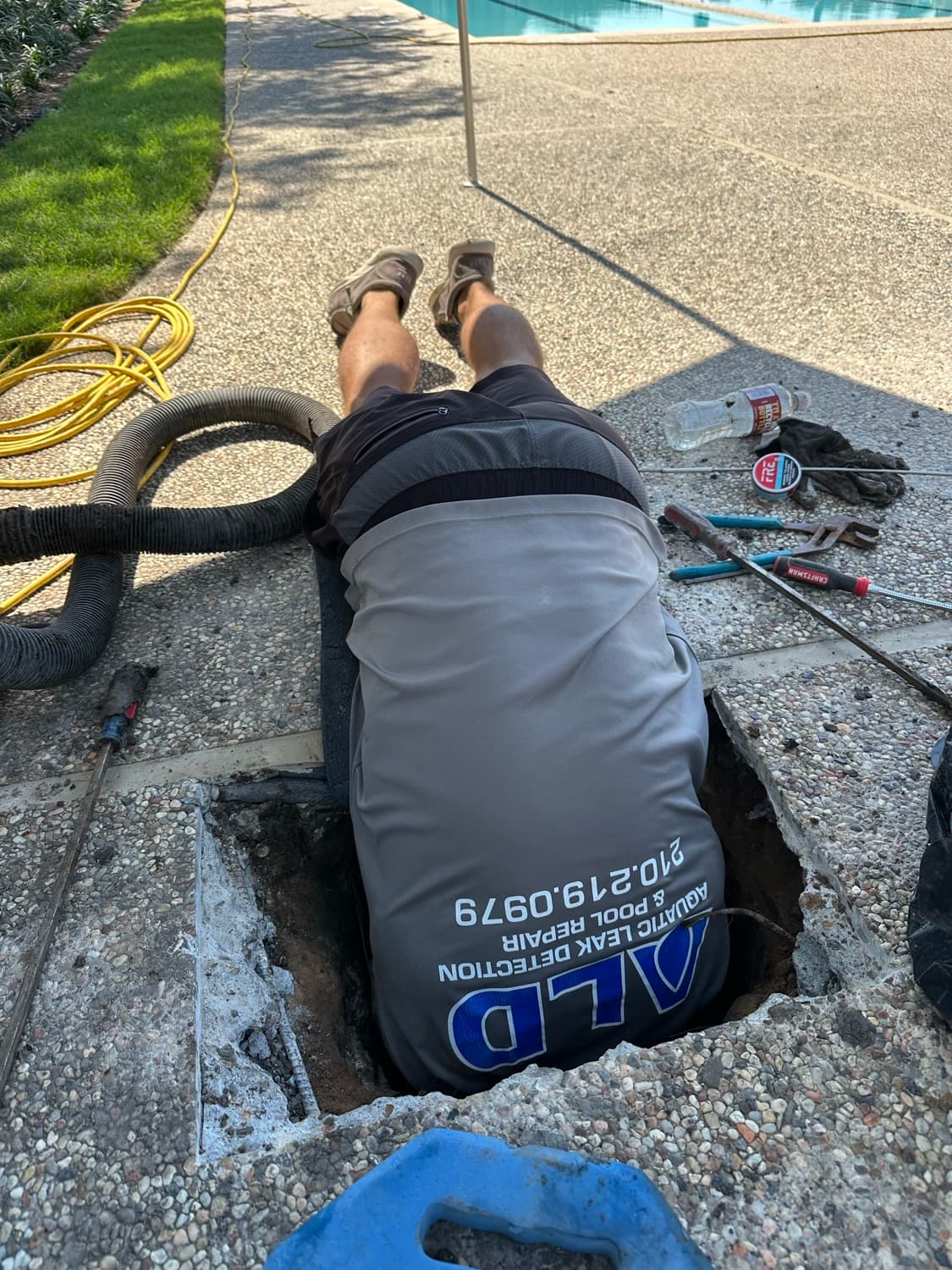
That is why cutting directly over the puddle is risky. The visible symptom guides testing, but the plumbing circuit must be isolated and the escape location narrowed before access begins.
From Pressure Test to Pinpointing
Pressure testing determines whether an individual suction, return, or feature line holds. Once a failed circuit is known, acoustic listening or tracer methods can narrow the break area. Underwater testing checks whether the source is instead a wall fitting or shell opening adjacent to the wet zone.
A post-repair pressure test should confirm the line is tight before concrete, pavers, or landscaping are restored. That protects the repair and the property owner from paying to close an unverified excavation.
When a Wet Spot Is Urgent
Act promptly if the deck is settling, soil is washing out, water is approaching electrical equipment, or the pool level is falling rapidly. Keep people away from unstable paving or undermined deck edges.
Even a slow leak matters in San Antonio's clay and New Braunfels' mixed limestone-and-clay ground. Adding water to already moving soil can worsen settlement, so early, precise diagnosis is less disruptive than waiting for the surface damage to reveal the source.