
Pool Return Line Leaks: Symptoms, Testing & Repair Decisions
The short answer
A leaking pool return line may cause faster water loss while the pump runs, a wet area near the deck, or soil movement with no visible equipment leak. Because underground water can travel away from the break, the correct sequence is to isolate and pressure-test the line, pinpoint the failure, and only then plan access.
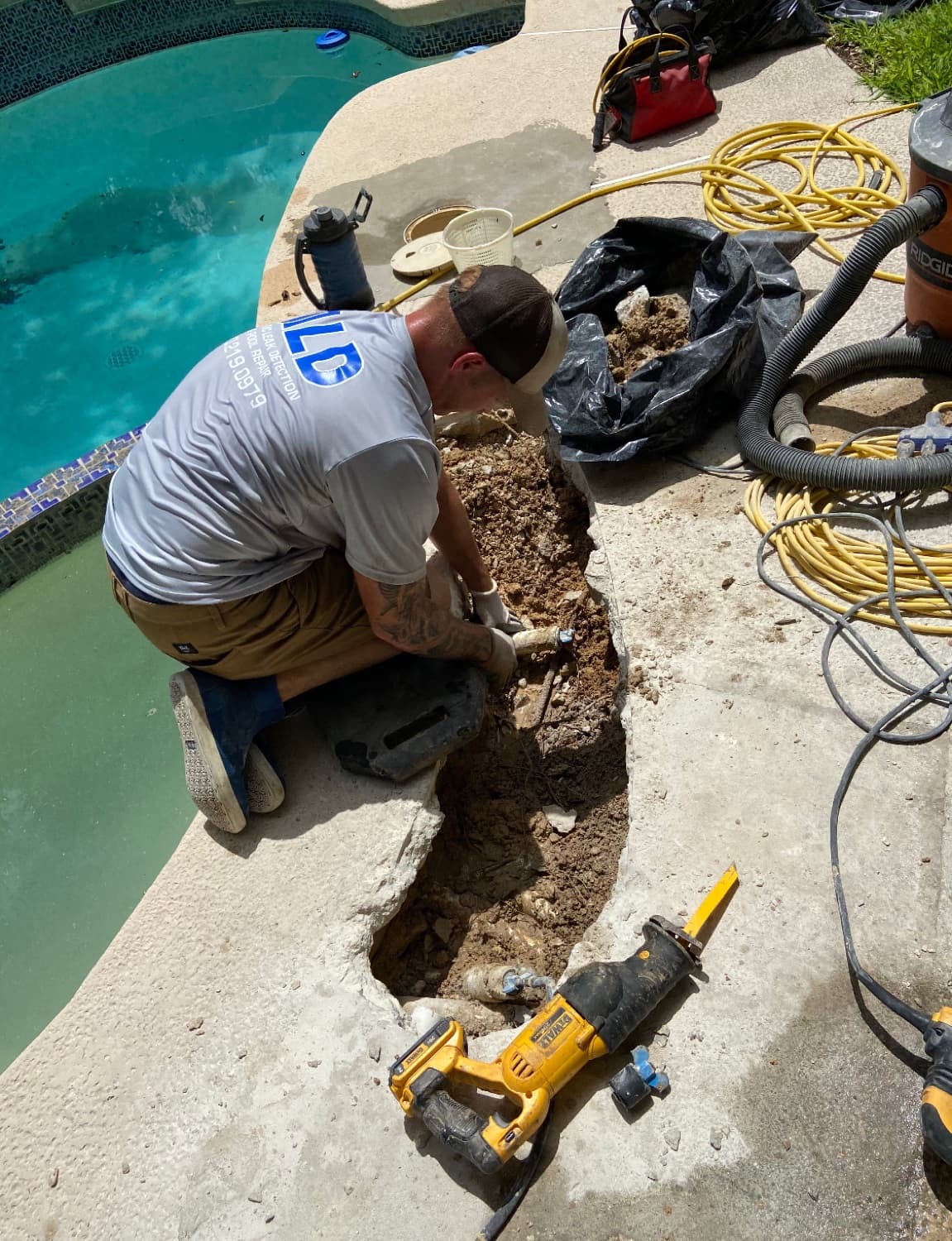
What a Pool Return Line Does
Return lines carry filtered water from the equipment pad back to the pool through wall fittings, floor returns, spa jets, or water features. When the pump is running, these pipes are under positive pressure. A split pipe, failed glue joint, or damaged fitting can release water into the surrounding soil every day the system operates.
Texas wet-and-dry cycles put buried rigid PVC under repeated stress. The vulnerable point is not always the pipe itself; joints, tees, and the connection behind a return fitting can fail while everything visible at the pad stays dry.
We test, we don't guess
Seeing this on your own pool? You don't have to figure it out alone — our techs pinpoint the exact source before anyone lifts a tool.
Family-owned · Licensed & insured · We answer the phone
Signs That Raise Suspicion
No single symptom proves a return-line leak. A useful pattern is measured water loss that increases during circulation, especially when a particular feature or group of returns is active. Damp soil, settling pavers, or a washed-out area can support the suspicion, but water may follow the plumbing trench and appear several feet from the source.
- Water loss is measurably greater with the pump running
- One return circuit or water feature changes the rate
- The equipment pad is dry despite continuing loss
- Deck joints open, pavers settle, or nearby soil stays unusually damp
- A return fitting shows a gap or draws dye during an underwater test
Isolation Before Excavation
A technician plugs the pool openings, isolates each circuit, and applies controlled test pressure while watching a calibrated gauge. A line that cannot hold is investigated further; a line that holds helps narrow the search to other plumbing or the pool interior.
Electronic listening, tracer gas, and targeted probing can help locate escaping pressure beneath a deck. Site conditions affect which method works best. Reinforced concrete, deep lines, and saturated soil change how sound travels, so experienced interpretation matters as much as the instrument.
Fitting Leak or Buried Pipe?
A failed seal at the return fitting may be accessible from inside the full pool and may not require deck removal. A confirmed break several feet back from the wall usually requires targeted access from above or beside the line. That distinction is why dye inspection and pressure testing belong together.
Avoid sealing every visible return as a blanket fix. A surface patch cannot repair a separated joint underground, and unnecessary sealant can make the eventual repair harder. The repair should match the confirmed failure.
Repair Planning in San Antonio and Central Texas
Around San Antonio and New Braunfels, clay, caliche, and limestone can make excavation highly variable from one yard to the next. Precise location limits deck cuts and reduces disturbance, particularly where lines pass beneath coping, patios, or landscaping.
After repair, the circuit should be pressure-tested again before the access area is closed. That verification is the clean finish to the process: confirmed failed, repaired, then confirmed tight.