
Pool Loses Water When the Pump Is Running: What That Pattern Means
The short answer
Faster water loss while the pump runs often shifts attention to pressurized return plumbing, equipment, or an active water feature. It is a valuable clue—not a final diagnosis—and controlled testing can isolate the exact circuit.
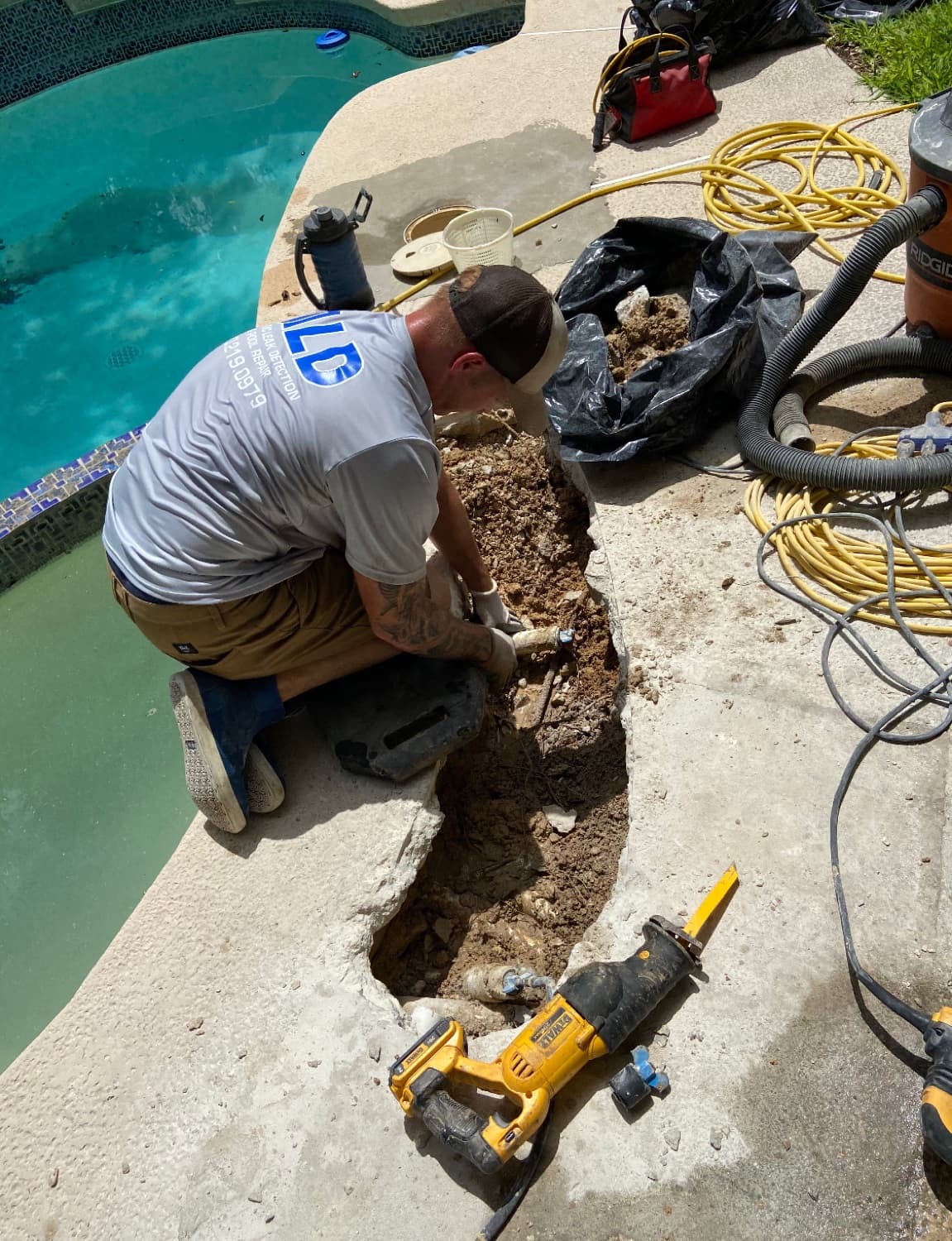
Why Pump-On Water Loss Matters
When the circulation pump runs, water is pulled through suction lines and pushed back through the filter, heater, valves, and return plumbing. A break on the pressurized side may release more water while that circuit is operating. A leaking filter connection, backwash path, raised-spa line, or water-feature circuit can also become active only during a schedule.
The pattern narrows the investigation, but it does not prove that a return pipe is broken. Evaporation, splash from a feature, an overflowing spa, and multiple leaks can confuse a casual observation.
We test, we don't guess
Seeing this on your own pool? You don't have to figure it out alone — our techs pinpoint the exact source before anyone lifts a tool.
Family-owned · Licensed & insured · We answer the phone
Run a Fair On-versus-Off Comparison
First confirm excess loss with a bucket test. Then, if the pool can safely sit without circulation for the test period, compare equal time windows under similar weather—one with the normal pump schedule and one off. Disable the auto-fill and mark the level precisely. Do not leave the pool stagnant longer than is appropriate for sanitation or freeze protection.
Record which valves and features were active. A test with a spa spillover running is not equivalent to basic pool circulation, and wind or rain can invalidate a small difference.
Inspect the Visible Pressure Side
With the system running, look at the filter housing and drain, heater connections, chlorinator, unions, valve stems, pump discharge, and exposed return pipes. Check where waste or backwash plumbing terminates; a valve that does not seal can quietly send water away from the equipment pad.
Stay clear of electrical components and never open a pressurized filter. A dry pad makes an underground leak more plausible but does not establish one.
- Drips or fresh mineral trails at pressure-side fittings
- Water leaving a waste or backwash discharge
- A spa or feature basin overflowing
- Wet soil that develops only during circulation
- Loss tied to one valve position or programmed feature
Pressure Testing Finds the Failed Circuit
A technician caps and tests return, feature, cleaner, and other lines separately. A circuit that will not hold controlled pressure is confirmed as compromised. Acoustic equipment and line tracing can then narrow the underground point before deck or soil is opened.
Other lines should still be checked as appropriate because pools can have more than one failure. The aim is a documented result for each relevant system, followed by a targeted repair and a confirming retest.
What to Do Until the Appointment
Maintain a safe water level so the pump does not draw air, and stop running an optional feature if it is clearly causing rapid loss. Do not plug essential circulation lines or alter valves unless a qualified professional directs you. Photograph valve positions before changing schedules.
Share the on/off measurements, active features, and any equipment-pad observations. That record can shorten the path from a broad symptom to the correct test.