Can a Pool Light Leak? How Light-Niche Leaks Are Found
The short answer
Pool lights can leak where the electrical conduit enters the niche, around the niche-to-shell bond, or through a nearby crack—not usually through the lamp itself. A careful underwater inspection and dye test can identify water movement while electrical safety and the condition of the assembly determine the repair.
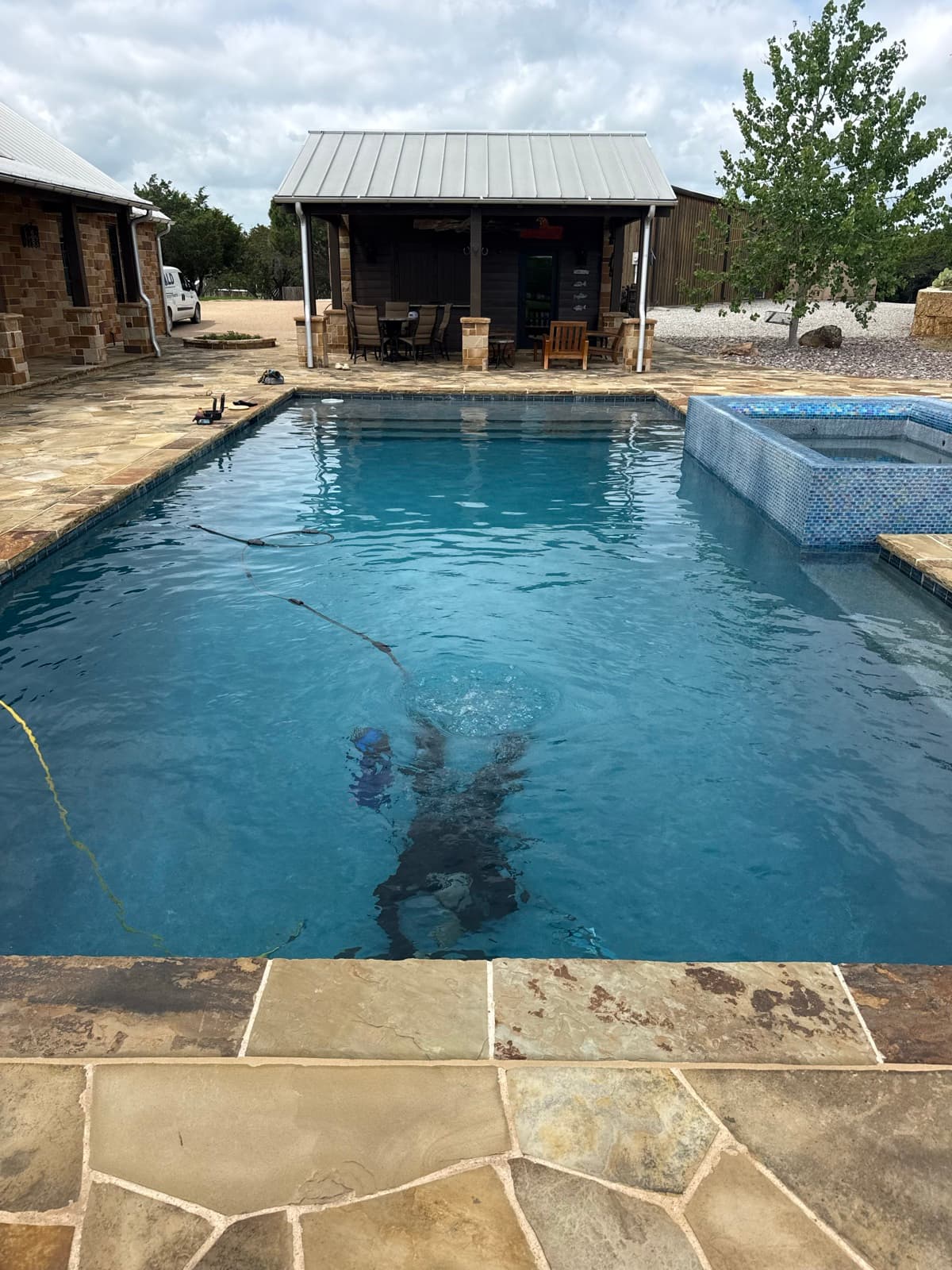
Where Water Escapes Around a Pool Light
A traditional underwater light sits in a metal or polymer niche embedded in the pool wall. Its cable runs through a conduit to a junction point above the pool water level. The common leak paths are the conduit opening at the back of the niche, a failed bond around the niche, or a crack where the rigid niche meets the shell.
Water behind the lens does not automatically mean the pool itself is leaking, and a pool leak near the light is not automatically an electrical failure. Both conditions deserve professional attention, but they are different diagnoses.
We test, we don't guess
Seeing this on your own pool? You don't have to figure it out alone — our techs pinpoint the exact source before anyone lifts a tool.
Family-owned · Licensed & insured · We answer the phone
Clues a Light Area Deserves Inspection
A waterline that repeatedly settles near the height of a light is a useful clue. So is visible cracking, missing material around the niche, or dye being pulled into a specific gap. The light may be completely off and still leak because hydrostatic pressure, not electricity, drives the water through the opening.
Do not handle a submerged fixture or open electrical components to investigate. Turn suspected lighting equipment off at the appropriate breaker and have qualified professionals address electrical condition separately from leak testing.
How Underwater Dye Testing Works
With circulation off and the water still, a technician releases a small amount of dye close to the suspected seam. Dye drawn consistently into one point shows active water movement. The test must be performed gently; turbulence from a hand, brush, or return jet can create a false impression.
The inspection also checks nearby plaster, tile, fittings, and cracks. A light is a conspicuous landmark, so owners naturally blame it even when the actual opening is inches away in the shell.
Conduit Seal, Niche Repair, or Structural Work
If the conduit entry is the confirmed path and the components are serviceable, an appropriate underwater sealing repair may stop the leak. A failed niche bond or shell crack calls for a different repair. Corroded, damaged, or obsolete electrical components may require coordination with a qualified pool electrician.
Repeatedly packing generic sealant into the niche without identifying the path can conceal deterioration and complicate future service. The durable decision comes from separating hydraulic evidence, structural condition, and electrical safety.
When to Call
Arrange an inspection when the bucket test confirms excess loss and the water approaches light height, when you see a crack around the niche, or when a previous seal has failed. If a light trips a breaker, flickers, shows water intrusion, or has damaged wiring, keep it off and treat that as an electrical safety issue immediately.
An underwater leak inspection keeps the pool full and examines the suspected area in its operating environment. That often produces a clearer answer than draining the pool before anyone has observed the leak.