
Why Your Pool Auto-Fill Won't Stop Running
The short answer
An auto-fill that runs constantly is one of the clearest signs a pool is losing water faster than Texas evaporation alone explains. It could be a valve problem, a plumbing leak, or a crack in the shell — here's how to figure out which.
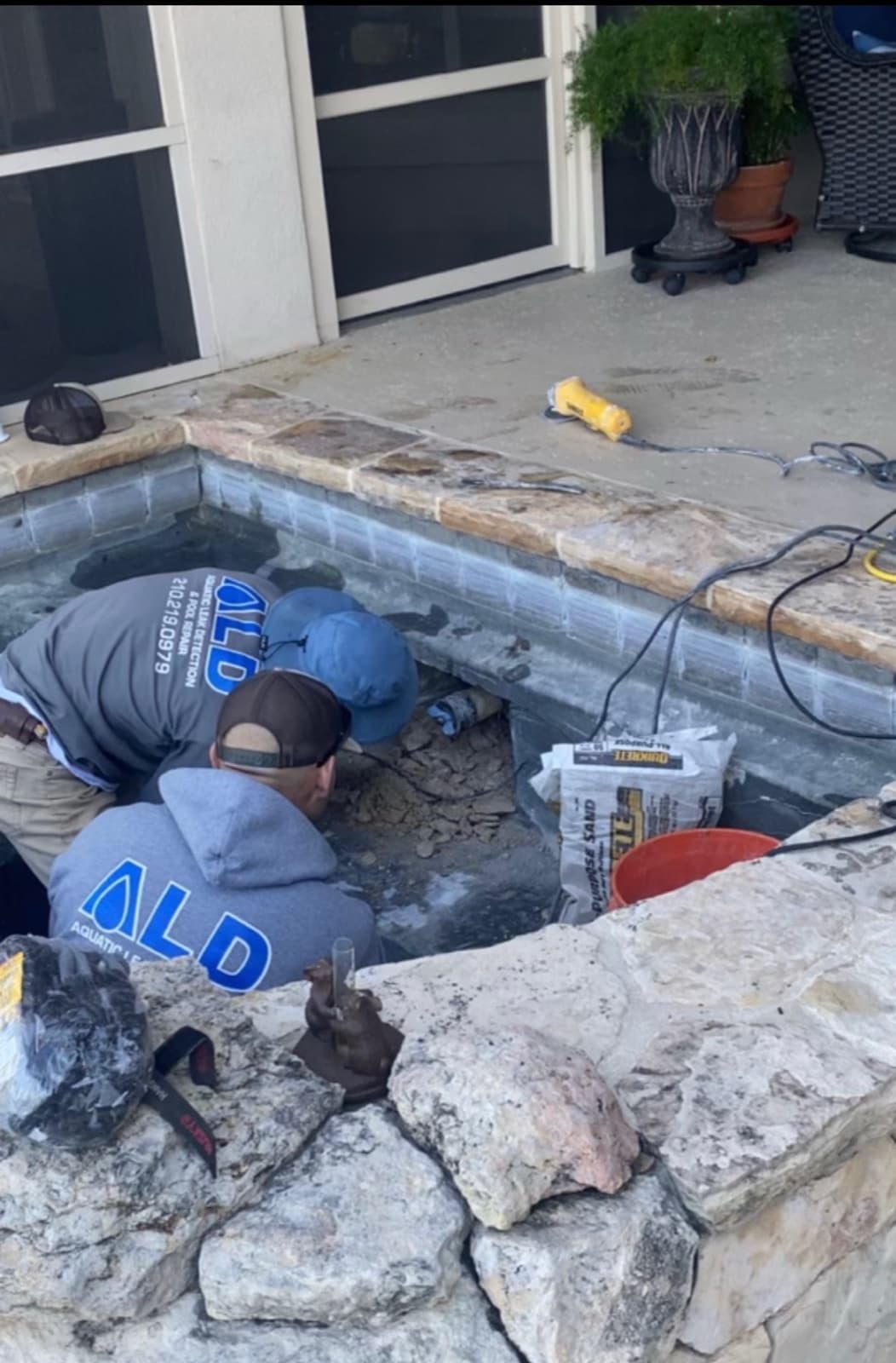
What an Auto-Fill Is Supposed to Do
A pool auto-fill — sometimes called an autofill valve or automatic water leveler — is a float-controlled valve that tops off your pool when the water level drops below a set point. Think of it like a toilet tank: the float drops, the valve opens, water rises, the float shuts it off.
In a healthy pool, the auto-fill might click on for a few minutes on a hot, windy afternoon in July and barely run at all on a mild spring day. If yours is running for long stretches — or never fully shuts off — something is wrong, and the question is what.
Evaporation vs. an Actual Leak
Texas summers are brutal on pool water. Across San Antonio, New Braunfels, and the Hill Country, normal evaporation runs roughly an eighth to a quarter inch of water per day. On a scorching, windy day that number can edge higher. So some auto-fill activity is completely normal.
The problem is that evaporation and a slow leak can look identical on the surface: the water level drops, the valve opens. To separate one from the other, do a bucket test. Fill a five-gallon bucket with pool water, set it on a step so it sits at the same water level, and mark both the pool surface and the bucket water line with tape. Check again in 24–48 hours.
- Both levels drop about the same amount — you're losing water to evaporation, not a leak
- The pool drops noticeably more than the bucket — something is pulling water out of your pool
- The pool level barely moves but the auto-fill never shuts off — suspect the valve itself
We test, we don't guess
Seeing this on your own pool? You don't have to figure it out alone — our techs pinpoint the exact source before anyone lifts a tool.
Family-owned · Licensed & insured · We answer the phone
When the Valve Itself Is the Culprit
Before assuming you have a structural or plumbing leak, check the auto-fill valve. Float valves can stick open, corrode, or shift out of position. If the valve is running but your water level is steady or even rising, the valve is misbehaving — not draining the pool.
A plumber or pool tech can usually diagnose a faulty float valve quickly. Turn off the auto-fill line at the supply shutoff and watch the pool level for 24 hours with the bucket test running. If the pool holds water with the auto-fill off, you've isolated a mechanical valve problem. If it still drops, you have a leak.
Underground Plumbing Leaks and Why They're Easy to Miss
San Antonio sits on top of Blackland clay and caliche that expands and contracts with every rain-and-drought cycle. New Braunfels has limestone under its Hill Country neighborhoods. Both soil types stress buried pool plumbing — return lines, suction lines, the main drain pipe — in ways that don't always produce wet spots in the yard.
A plumbing leak under the deck or slab can drain steadily into the soil and never announce itself visibly. The auto-fill just keeps the pool topped off while the water (and your water bill) quietly disappears. Pressure testing each line individually is the only reliable way to confirm whether the plumbing is the source.
Structural Leaks — Cracks, Skimmers, and Fittings
Beyond the plumbing, water escapes through cracks in the shell, through a deteriorating skimmer throat, and around fittings or lights that have lost their seal. Pool shells in Texas — especially older plaster or pebble-finish pools — develop hairline cracks when the ground shifts. Clay soil around Helotes or Alamo Heights heaves in wet winters and shrinks in dry summers; over years, that movement cracks the shell.
A skimmer leak is particularly common and easy to overlook. The skimmer body is usually plastic set in concrete; when the bond between the two breaks down, water seeps behind the skimmer and drains without any crack being visible from inside the pool. If your auto-fill seems to run most heavily when the equipment is on, a suction-side skimmer leak is worth investigating.
What to Do When You Can't Pin It Down
If the bucket test confirms a leak but you can't locate the source by visual inspection, it's time for professional detection. Electronic and acoustic detection equipment can identify pressure drops in plumbing lines down to the foot, and an underwater inspection can map shell cracks and fitting leaks without draining the pool.
Aquatic Leak Detection serves San Antonio, New Braunfels, and surrounding Central and West Texas. We test first — systematically and with documented results — before any repair work begins. If your auto-fill is running constantly and the bucket test points to a real leak, call us at (210) 219-0979 and we'll figure out exactly where the water is going.