What Happens During an Underwater Pool Inspection
The short answer
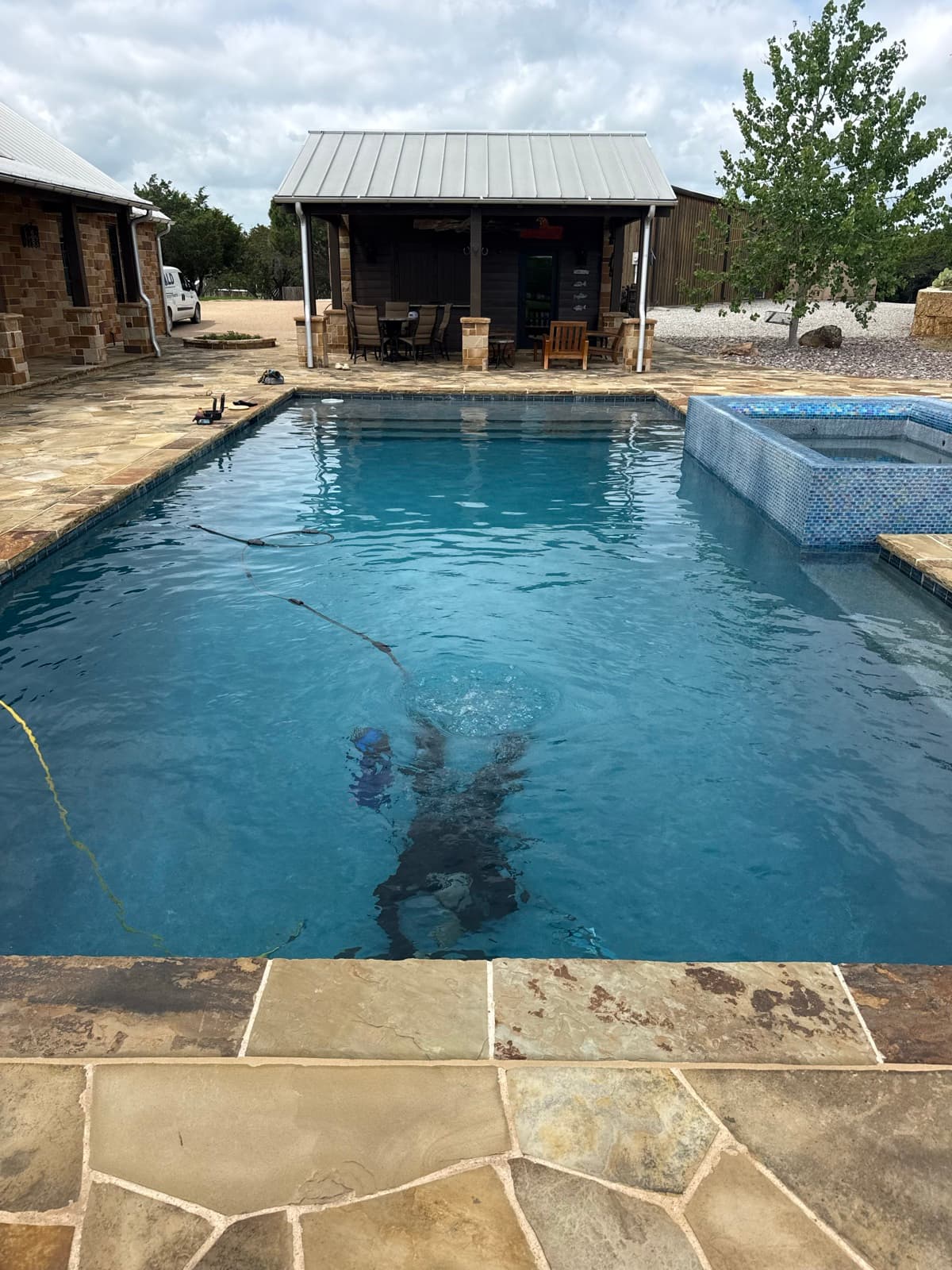
An underwater inspection uses a trained diver to check every potential leak point — drains, returns, light niches, fittings, and the shell itself — while the pool stays full. It's the most thorough way to confirm or rule out a structural leak.
Why Look Underwater Instead of Just Draining the Pool?
When a pool is suspected of leaking, the obvious thought is: drain it, dry it out, look for cracks. But draining a pool has real downsides. In San Antonio and Central Texas, the expansive Blackland clay can push back against an empty shell hard enough to cause hydrostatic uplift — the shell pops up slightly from the ground pressure. It's not common, but it happens, and it's expensive.
Beyond that risk, many leak sources only reveal themselves under water pressure. A fitting that holds fine when dry may seep the moment the pool refills. A dye test to confirm a crack's direction requires water in the pool. An underwater inspection skips all of that — it works with the pool full, at operating pressure, which is exactly the condition the leak occurs in.
We test, we don't guess
Seeing this on your own pool? You don't have to figure it out alone — our techs pinpoint the exact source before anyone lifts a tool.
Family-owned · Licensed & insured · We answer the phone
What the Diver Is Looking For
An underwater inspection isn't just a swim-around. The diver works methodically through every area where water can escape the shell. Those locations fall into a few categories:
- Main drain assembly: The drain cover, gasket, and the bond between the drain housing and the gunite shell are all checked. Older pools often have single-drain designs that were replaced under safety codes; the original drain area can be a weak point.
- Return jets and fittings: Every wall fitting is examined for separation from the shell or failed gaskets. Expansive clay soil shifting over years can pull fittings slightly out of position.
- Skimmer throat and equalizer: The skimmer is one of the most common leak locations. The diver checks where the plastic skimmer meets the concrete shell and where the equalizer line enters the pool.
- Light niches: Pool lights sit in recessed niches sealed with gaskets and conduit fittings. Both the niche itself and the conduit entry are checked — conduit runs are a known water pathway.
- Shell surface: Cracks, spalling, and delaminated plaster are noted, especially any cracks that show active movement or accept dye.
How Dye Testing Works Underwater
When the diver finds a suspicious area — a crack that looks deeper than surface level, a fitting that looks slightly separated — the next step is a dye test. A small amount of dye is released near the suspected location. Water pulling through a leak will draw the dye toward it; water that isn't leaking will let the dye drift or disperse.
This is a direct, low-tech confirmation that doesn't require guesswork. If the dye gets pulled into a crack, that crack is leaking. If it drifts away neutrally, the crack is cosmetic or sealed. The diver can check multiple locations in a single dive.
Dye testing works because it tests under real operating conditions — the pool is full, the pump may be on or off depending on what's being tested, and water pressure is normal.
How Underwater Inspection Pairs with Pressure Testing
An underwater inspection covers the shell and fittings — the structural side of the pool. Pressure testing covers the buried plumbing lines — the pipes running from the pool to the equipment pad and back.
These two tests address different parts of the system. A pool can have a perfectly sound shell and leaking underground pipes, or solid plumbing and a dripping light niche. Running both gives a complete picture.
If the underwater inspection comes up clean but the pool is still losing water, pressure testing the plumbing lines is the logical next step. If pressure testing is clean and the shell looks fine, the loss may be from the equipment pad itself — pump seals, filter tank O-rings, or valve fittings.
The goal is a systematic answer, not a guess. 'We test. We don't guess.' is how Aquatic Leak Detection approaches every job.
What to Expect on the Day of an Underwater Inspection
For the homeowner, an underwater inspection is straightforward. The pool stays full and doesn't need any special preparation beyond being reasonably clear — visibility matters for the diver.
The technician will walk through what they're checking and why before they start. After the inspection, you get a direct summary of what was found: which locations looked clean, which showed dye uptake or visible separation, and what the recommended repairs are. Nothing vague.
If a fitting needs replacing or a crack needs to be chiseled and sealed, that work can usually be scheduled quickly since it doesn't require draining. Most shell repairs are done underwater or with a partial drain only to the repair area.