
Pool Leak Detection in Schertz and Cibolo: A Practical Owner's Guide
The short answer
Pool owners in Schertz and Cibolo can use water-level patterns and a bucket test to recognize a real leak, but locating it takes system-by-system testing. Here is what to document and what a sound diagnosis should include.
Why Water Loss Deserves a Measured Answer
Schertz and Cibolo sit in the fast-growing corridor northeast of San Antonio, where pools range from established backyard builds to newer installations. Age alone does not identify the problem. Seasonal soil moisture changes can stress rigid PVC and the joints where plumbing enters the shell, while fittings and sealants also wear over time.
A pool can lose water underground without making the lawn visibly wet. Conversely, splash-out, wind, and summer evaporation can look alarming even when the vessel is sound. The first job is confirming excess loss, not choosing a repair from symptoms alone.
We test, we don't guess
Seeing this on your own pool? You don't have to figure it out alone — our techs pinpoint the exact source before anyone lifts a tool.
Family-owned · Licensed & insured · We answer the phone
Four Clues Worth Recording
Turn off the auto-fill long enough to observe the pool safely, then note the waterline at the same time each day. A bucket test provides an evaporation control. Also record whether loss changes with the pump running and whether it slows at the skimmer, returns, or light level.
- Loss at all times can point toward the shell or a submerged fitting
- Faster loss with circulation can implicate a pressure-side line or equipment leak
- Faster loss while off can be consistent with some suction-side failures
- A level that stabilizes near the skimmer can focus inspection there but does not prove the skimmer is responsible
What Professional Testing Should Cover
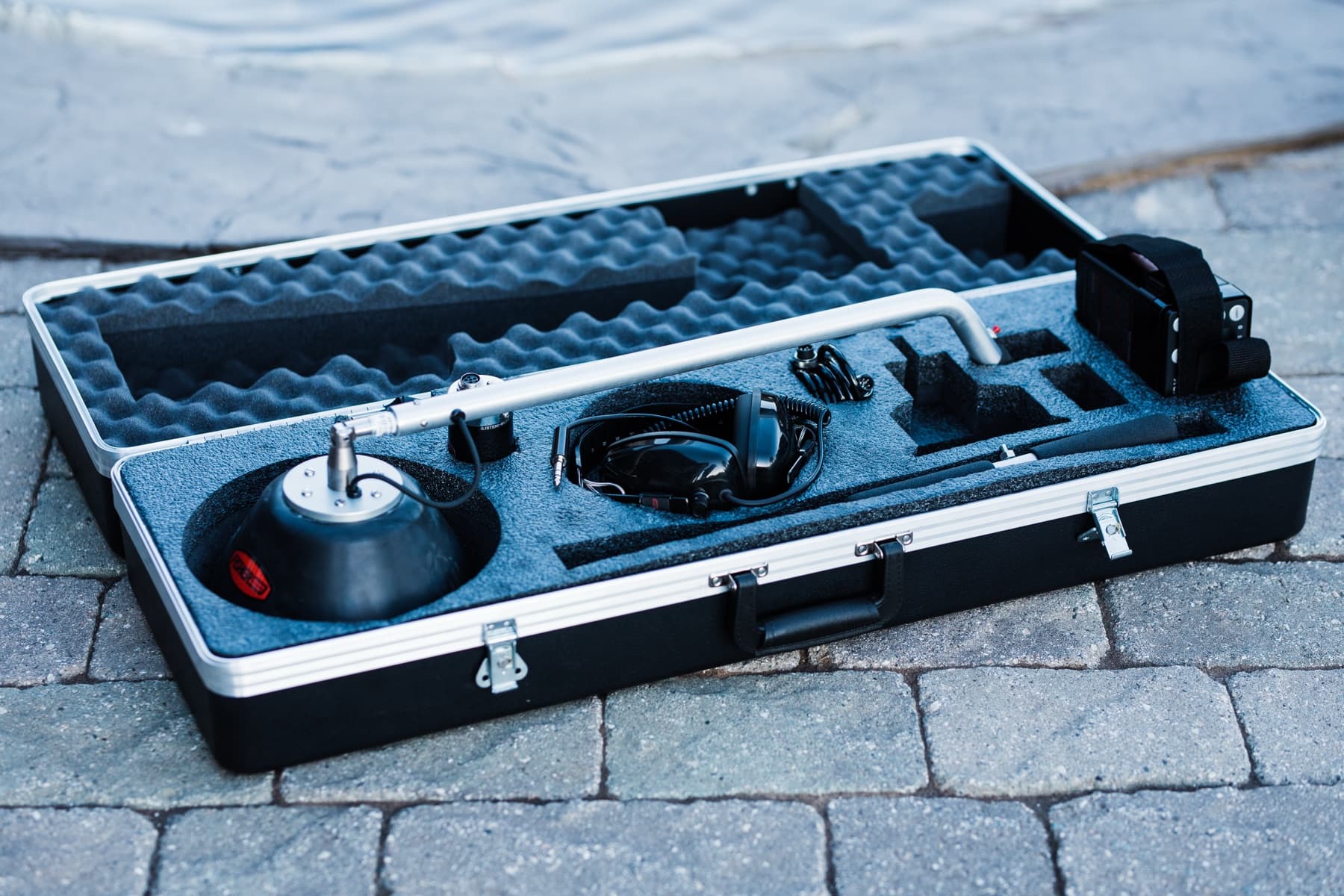
The plumbing circuits should be isolated and tested separately rather than treated as one network. A pressure gauge shows whether each capped line holds. If one fails, tracing and listening equipment can narrow the buried break. If the lines hold, the investigation shifts to the vessel and fittings.
Underwater dye testing checks for water being drawn into gaps around returns, drains, lights, and cracks. The skimmer deserves close inspection at the throat and body. These methods complement each other: pressure testing answers which line, while underwater inspection answers which submerged feature.
Repair Only the Confirmed Failure
A diagnosis should end with a specific finding, not a broad instruction to replace several components and hope. Accessible seals may be repaired without excavation. A failed buried line should be reached at the marked location and retested after repair. A moving structural crack needs a durable structural approach, not simply fresh plaster over the symptom.
Targeted work protects the deck and prevents owners from paying for unrelated replacements. It also provides a clean baseline if more than one leak is present.
Prepare for the Detection Visit
Keep the pool full to its normal operating level unless the technician tells you otherwise; underwater fittings cannot be evaluated properly when exposed. Clear the equipment pad, know which valves control water features, and share any recent construction or freeze damage. Do not add leak-sealing chemicals before testing because they can cloud the evidence and affect equipment.
Bring your bucket-test notes and recent water-use observations. A short, consistent record is more valuable than an estimate made from memory.