
Bulverde and Spring Branch Pool Leaks: Finding Water Loss in Hill Country Ground
The short answer
On Bulverde and Spring Branch properties, slopes and limestone can move leaking water away from the actual break. Confirming excess loss and isolating each pool system prevents needless digging.
Hill Country Lots Change the Evidence
Bulverde and Spring Branch pools are often built where soil depth, limestone, and grade can change within the same property. A plumbing trench may cross rock and fill, and those transitions create stress points as moisture conditions change. If a line leaks, water can follow the trench or move downhill instead of surfacing above the break.
That is why a damp retaining wall, settling paver, or green patch is context rather than proof. The source still has to be isolated at the pool.
We test, we don't guess
Seeing this on your own pool? You don't have to figure it out alone — our techs pinpoint the exact source before anyone lifts a tool.
Family-owned · Licensed & insured · We answer the phone
Rule Out Normal Loss First
Hill Country sun and wind can produce meaningful evaporation, especially from pools with an exposed surface, raised spa, or water feature. Shut off the auto-fill and compare the pool with a bucket of pool water on a step for 24 to 48 hours. Pause the test for heavy rain or unusually active swimming.
If the pool drops farther than the bucket, measure the difference and note whether all features were running. That establishes a useful baseline for diagnosis and keeps normal weather loss from being mistaken for a repair problem.
Where Leaks Commonly Hide
The shell and the circulation system must both be considered. Skimmer throats can separate where plastic meets the pool structure. Return fittings, light conduits, drains, and visible cracks can leak below water. Underground lines can fail at joints or where support beneath the pipe has shifted.
- Water slowing at the skimmer or light elevation
- Air in the pump basket or returning through jets
- A raised spa that drops when circulation stops
- Movement or voids near a deck edge
- A line that will not hold controlled test pressure
A No-Guesswork Detection Sequence
Technicians first review the observed loss and equipment behavior. Each plumbing circuit is then capped and pressure tested. Lines that hold can be cleared from suspicion; a failing line can be traced and listened to before access is planned.
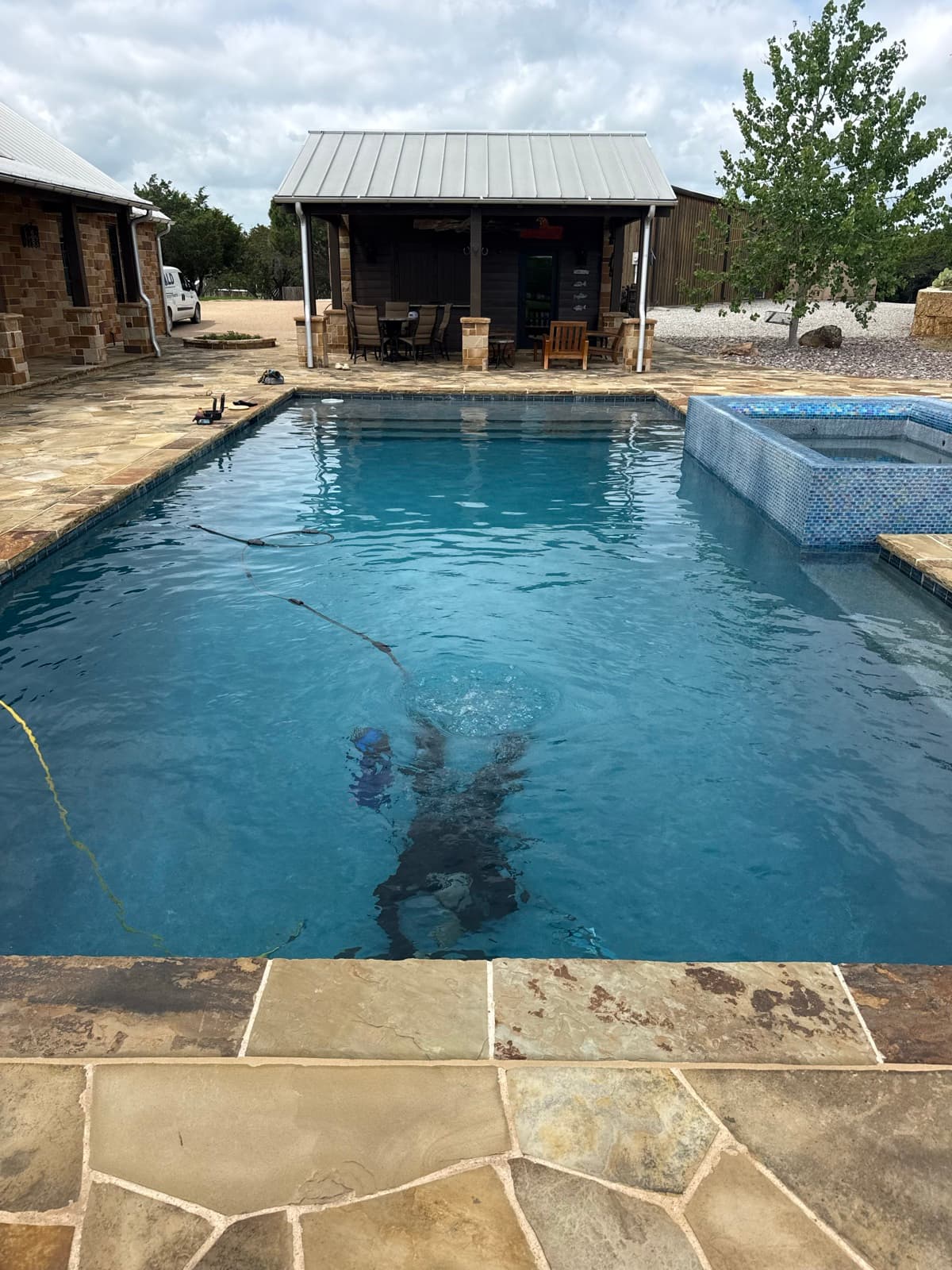
A diver can inspect submerged surfaces and dye-test suspicious fittings without draining the pool. Combining these findings produces a repair tied to evidence rather than to whichever component is easiest to replace.
Protect the Site With Targeted Repair
On rocky or finished Hill Country properties, unnecessary excavation is expensive and disruptive. A confirmed location allows a smaller access area, and the repaired pipe should be pressure tested before backfill or deck restoration. Underwater fitting repairs may avoid excavation entirely.
Do not let a slow loss run indefinitely. Escaping water can remove fine material around a pipe trench or below deck support, turning an otherwise focused repair into settlement work.